








Trump law pushes US behind China in clean energy race
Cuts in subsidies for wind and solar power in the United States are slowing the clean energy sector, driving up electricity prices, and straining economic growth, while China consolidates its leadership with massive investments.

Petroturk | Enerji Haberleri
- 18 Eylül 2025 16:34
Mehmet Ekici – İstanbul
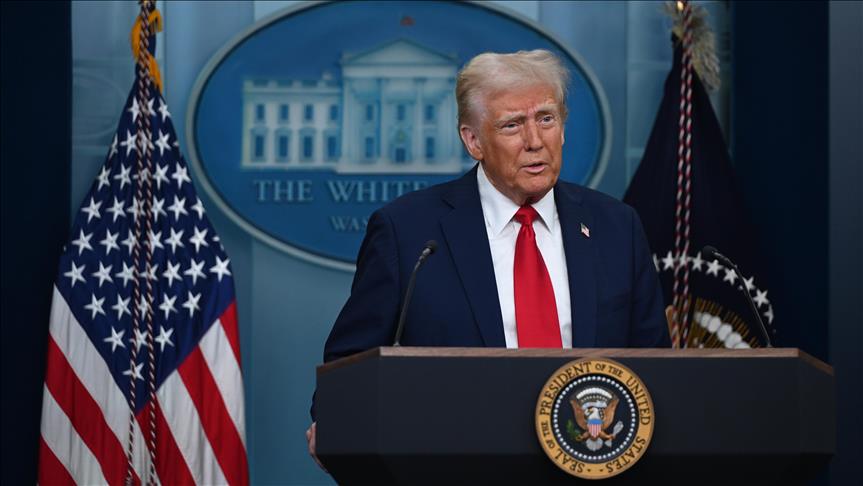
The US was already lagging behind China in renewable energy investments. But the new spending law signed by President Donald Trump has further set the country back in the clean energy race by reducing tax incentives for wind and solar power. According to experts, this policy will raise electricity costs and harm the US’s economic and technological competitiveness.
510 GIGAWATTS OF NEW CLEAN ENERGY ON THE WAY
According to Global Energy Monitor data, China installed more wind and solar capacity in 2025 alone than the US’s total renewable capacity. The country currently has 1,400 gigawatts of renewable capacity, with another 510 gigawatts under construction. In the US, 275 gigawatts of capacity are operational, and an additional 150 gigawatts are planned by 2031. However, Trump’s new law puts most of these projects at risk.
The law rapidly phases out tax credits for wind and solar power, and according to Rhodium Group modeling, this will cut planned renewable capacity in the US over the next decade by about half. As a result, electricity prices will rise as more expensive natural gas plants replace cheap renewable energy. This will both increase consumer bills and delay industrial investment.
CHINA REMOVES OBSTACLES
In the US, lengthy permitting processes remain a major hurdle for new projects. Experts warn that data centers, semiconductor manufacturing, and other energy-intensive industries may struggle to establish new facilities if sufficient electricity is not produced. Rhodium Group analyst Ben King said: “Delays in energy infrastructure could prevent some industrial projects from being realized.”
In China, however, the energy transition is advancing without pause. Alongside wind and solar power, large-scale battery systems, electric vehicle infrastructure, and grid integration are making energy use more efficient. Li Shuo noted: “It’s now rare to see gas-powered cars on most roads in Beijing. Almost all Uber drivers use electric vehicles, and their fuel costs are about one-sixth of conventional cars.”
A LONG ROAD AHEAD FOR CLEAN ENERGY
Global Energy Monitor analysts Mengqi Zhang and Yujia Han explained that the surge in installations in China was driven by efforts to take advantage of subsidies that expired in June. This led to a rapid increase in renewable energy investments. However, strong groups supporting coal and fossil fuel interests still exist within China’s energy sector. Shuo emphasized: “The share of renewables is increasing, but coal production and consumption have not been completely eliminated.”
In the US, wind and solar technologies promise long-term cost advantages and environmental benefits, but the Trump law restricts this potential. The result is higher electricity costs and a loss of competitiveness in the clean energy sector to China. Experts stress that the US must take urgent policy action in the coming years to avoid falling behind both economically and environmentally.


SON HABERLER
Denizüstü Rüzgar Enerjisi Derneğinin ilk liman toplantısı Mersin’de düzenlendi13 Haziran 202609:00 GKRY, İsrail, Yunanistan ve ABD, Doğu Akdeniz Enerji Merkezi kurulması için anlaştı13 Haziran 202608:30 Elektrikli araçlar dünyanın çevresini 4 bin 400 kez dolaştı13 Haziran 202608:00 Bakan Bayraktar TANAP’ın 2018’den bu yana 99 milyar metreküpe yakın doğal gaz taşıdığını bildirdi12 Haziran 202616:51 Petrol Ofisi, Türkiye’nin marka değeri sıralamasında akaryakıt sektöründe yeniden ilk sırada12 Haziran 202615:24
Diğer Haberler