











Turkey Strengthens Its Energy Hub Ambitions with $15 Billion Cubic Meters LNG Deals
In line with Turkey’s recent shift in natural gas strategy from imports to exports, new agreements for liquefied natural gas (LNG) supply have been activated. Experts say that Turkey’s increasing LNG procurement capacity will strengthen both energy supply security and the country’s goal of becoming an energy hub.
Petroturk.com • Soner Okur
- 15 Eylül 2025 12:03
In line with Turkey’s recent shift in natural gas strategy from imports to exports, new agreements for liquefied natural gas (LNG) supply have been activated. Experts say that Turkey’s increasing LNG procurement capacity will strengthen both energy supply security and the country’s goal of becoming an energy hub.
Turkey, which has advanced infrastructure of pipelines, LNG terminals, and underground storage, has been able to navigate regional tensions and peak winter consumption periods without disruption in natural gas supply—a critical pillar of energy security. Now, Turkey is stepping up to transition from a natural gas importer to an exporter.
Following initial export moves to Europe, including recent deals covering Syria, the diversity of Turkey’s LNG supply portfolio is being reinforced with new agreements.
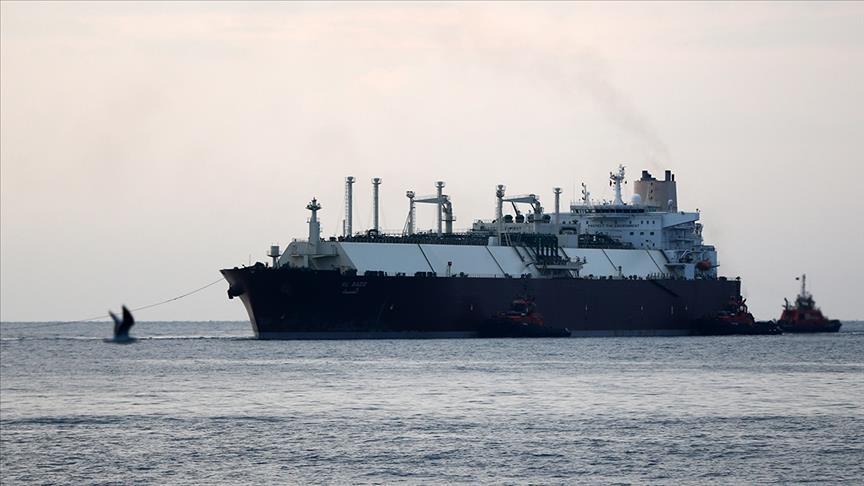
During his meetings at the “Gastech 2025 Forum” in Milan, Italy, Energy and Natural Resources Minister Alparslan Bayraktar signed agreements between Boru Hatları ile Petrol Taşıma AŞ (BOTAŞ) and several companies to supply approximately 15 billion cubic meters of LNG to Turkey.
According to these agreements, which will start deliveries during the critical winter months, BOTAŞ will procure 4.8 billion cubic meters from BP, 1.5 billion from ENI, 2.4 billion from Shell, 1.8 billion from SEFE, and 1.5 billion from Equinor over three years.
BOTAŞ will also purchase 600 million cubic meters from Hartree over two years, 1.2 billion cubic meters from U.S. LNG producer Cheniere, and 600 million cubic meters from Japanese energy company JERA.
“Deals Advance Turkey’s Goal of Becoming an Energy Hub”
Wael Hamed Abdel Moati, Global Gas Markets Specialist at OAPEC, told Anadolu Agency:
“Considering that Turkey’s total gas supply in 2024 from domestic production and imports is 54 billion cubic meters, a 15 billion cubic meters LNG supply covers more than 30% of demand. Securing this supply creates significant liquidity that Ankara can channel into regional exports. While meeting domestic peak demand, Turkey also gains flexibility to strengthen export commitments to Bulgaria, Romania, Hungary, and prepare for new markets such as Iraq.”
Moati noted that Turkey has significantly increased spot LNG purchases from the U.S. in recent years, accounting for roughly 43% of the country’s total LNG imports. He added that this trend highlights the importance of American LNG in covering seasonal fluctuations and market gaps.
He also pointed out that LNG now meets about a quarter of Turkey’s total gas demand, and shifting from spot purchases to medium-term contracts provides Ankara the same flexibility under more predictable conditions.
Moati emphasized that the agreements give Turkey three strategic advantages:
“First, it diversifies supply by making U.S. LNG a stable component. Second, it secures volumes for winter, reducing exposure to volatile spot prices and strengthening supply security. Third, with five LNG terminals, an annual 30 million-ton regasification capacity, and multiple pipeline connections to Southeastern Europe, these deals advance Turkey’s goal of becoming an energy hub. Additional flows increase market liquidity and enable more stable exports to neighbors.”
“Turkey Will Have More Gas to Sell to the EU”
Tamas Pletser, Oil and Gas Analyst at Erste Investment, noted that U.S. LNG production capacity is rapidly increasing and will continue to grow in 2026. Projects such as Plaquemines, Canada LNG, and Golden Gate 3 are progressing quickly, providing abundant capacity available for sale. He said LNG prices are currently very attractive.
Pletser explained that U.S. LNG offers Turkey a favorable price margin for both domestic consumption and re-export:
“I believe Turkey will have more gas to sell to the EU. Spare capacity exists in current pipelines via Bulgaria and Romania. If the U.S. and EU push to rapidly wean Hungary and Slovakia off Russian gas, demand in Central Europe could rise. Politicians’ positions make this scenario more likely.”
He also mentioned that with increasing domestic production in the Sakarya Gas Field in the Black Sea, in addition to other LNG sources, gas from Russia, Iran, and Turkmenistan can also be delivered through Turkey, positioning the country as a key hub for Middle Eastern gas.
100 Billion Cubic Meters of LNG Deals in the Last Three Years
To ensure supply security and accelerate export-oriented activities by diversifying sources, Turkey has signed LNG agreements totaling 100 billion cubic meters in recent years.
Within this framework, BOTAŞ signed an LNG Supply Agreement with Oman in January 2023 for 2025–2035, importing up to 1 million tons (approximately 1.4 billion cubic meters) annually.
New agreements were added in 2024 to those made previously. Under a May 2024 Memorandum of Understanding with ExxonMobil, the company will supply up to 2.5 million tons (approximately 3.45 billion cubic meters) of LNG annually to Turkey. Last year, BOTAŞ also signed 10-year LNG agreements with Shell (September 2) and TotalEnergies (September 18) starting in 2027.
Under these agreements, BOTAŞ will receive most of the annual 4 billion cubic meters from Shell and 1.6 billion cubic meters from TotalEnergies directly from U.S. production terminals, with a portion delivered to Turkey or European terminals according to BOTAŞ’s request.
AA


SON HABERLER
Rusya Başbakan Yardımcısı Novak’tan yakıt piyasasında normalleşme sinyali21 Temmuz 202617:00 Fırat EDAŞ ve Çoruh EDAŞ mobil uygulamaları yenilendi21 Temmuz 202616:51 IEA Başkanı Birol, petrol arzının yüksek seviyelerde seyrettiğini bildirdi21 Temmuz 202615:51 Aksa Enerji’nin Senegal yatırımına 57 milyon avroluk uluslararası finansman21 Temmuz 202614:42 Tüpraş, HERMES projesi ile temiz hidrojen teknolojisini sahada test edecek21 Temmuz 202614:40
Diğer Haberler