










Akkuyu Nuclear Power Plant Approaches Final Stage to Commission First Unit
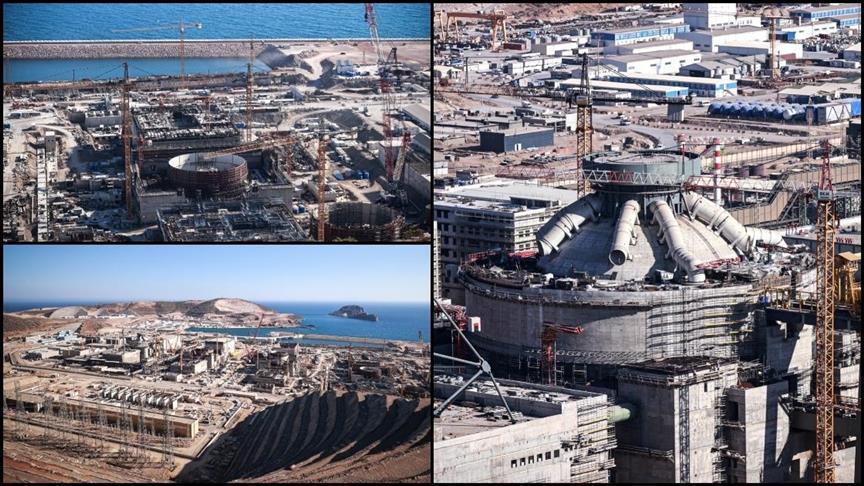
At the Akkuyu Nuclear Power Plant (NPP) under construction in Mersin, the first unit, which has entered the commissioning process, will soon move to the operational phase.
Petroturk.com • Soner Okur
- 15 Eylül 2025 11:58
At the Akkuyu Nuclear Power Plant (NPP) under construction in Mersin, the first unit, which has entered the commissioning process, will soon move to the operational phase.
Sergey Butckikh, General Manager of Akkuyu Nuclear JSC, told Anadolu Agency that work is being carried out across all four units of the plant located in Mersin’s Gülnar district.
Emphasizing that the first unit is the priority in the project, Butckikh said:
“We are currently conducting commissioning activities. At this stage, all equipment of the systems undergoes tests, their operation is checked, and preparations are made for safe operation. After the commissioning work in the first power unit, we will proceed to the operational phase.”
Butckikh added that many systems at Akkuyu NPP will function as normal operational systems, while others will serve as safety systems.
Commissioning Demonstrates Plant’s Readiness
Explaining that commissioning activities are being carried out on-site for these systems, Butckikh continued:
“These activities are not only about checking system operations under the scenarios foreseen in the design and beyond, but also show how the systems will function throughout the nuclear power plant’s lifetime and how safely the plant can operate in the future. The ongoing work is an integral and highly important stage of preparing the plant for operation. Completion of commissioning will demonstrate that the nuclear plant is fully ready to go online.”
Regarding the significance of commissioning and the system on-site, Butckikh added:
“After verifying the correct operation of specific equipment units and safety operational systems, we will move to the stage of loading fresh nuclear fuel, physically commissioning the plant, and reaching a minimum controllable power level. Then, as the reactor reaches nominal power, the turbine will be rotated, all operational modes will be tested and checked, and finally, the plant will enter energy production modes for commercial operation.”
Work on the Second Unit
Butckikh stated that work on the second power unit of Akkuyu NPP is progressing according to schedule, similar to the first reactor.
“We are preparing for a very important stage. The welding of the main circulation pipeline will begin, ensuring the coolant circulation is secured. This is a crucial milestone for us, as it indicates that the second unit is ready for a certain stage. We also plan to complete the installation and concreting of the containment dome soon. Installation work continues in the turbine hall, and the turbo generator equipment is being set up.”
Localization Rate Exceeded Expectations
Highlighting the importance given to localization from the very beginning, Butckikh said:
“Joint working groups were established with the Ministry of Energy and Natural Resources and the Turkish Standards Institute. It was expected that the number of Turkish companies participating in the project would be limited to around 400 firms. Overall, approximately 2,000 companies have been involved as suppliers and contractors, and the localization rate has exceeded expectations. This is not the end—we still have many issues to resolve, which involve including other Turkish companies and various equipment manufacturers. We will continue working closely with them, expand the variety of products used in the project, and strengthen our relationships.”
Will Meet 10% of Turkey’s Electricity Demand Alone
Akkuyu NPP will consist of four reactors, each with a capacity of 1,200 megawatts. After the first unit is commissioned, the other units are expected to come online at one-year intervals.
When operating at full capacity, the plant alone will meet 10% of Turkey’s electricity demand. Its planned operational life of 60 years also has the potential to be extended by an additional 20 years.
AA


SON HABERLER
Rusya Başbakan Yardımcısı Novak’tan yakıt piyasasında normalleşme sinyali21 Temmuz 202617:00 Fırat EDAŞ ve Çoruh EDAŞ mobil uygulamaları yenilendi21 Temmuz 202616:51 IEA Başkanı Birol, petrol arzının yüksek seviyelerde seyrettiğini bildirdi21 Temmuz 202615:51 Aksa Enerji’nin Senegal yatırımına 57 milyon avroluk uluslararası finansman21 Temmuz 202614:42 Tüpraş, HERMES projesi ile temiz hidrojen teknolojisini sahada test edecek21 Temmuz 202614:40
Diğer Haberler