







EU energy imports from the US to rise 2.5 times with new agreement
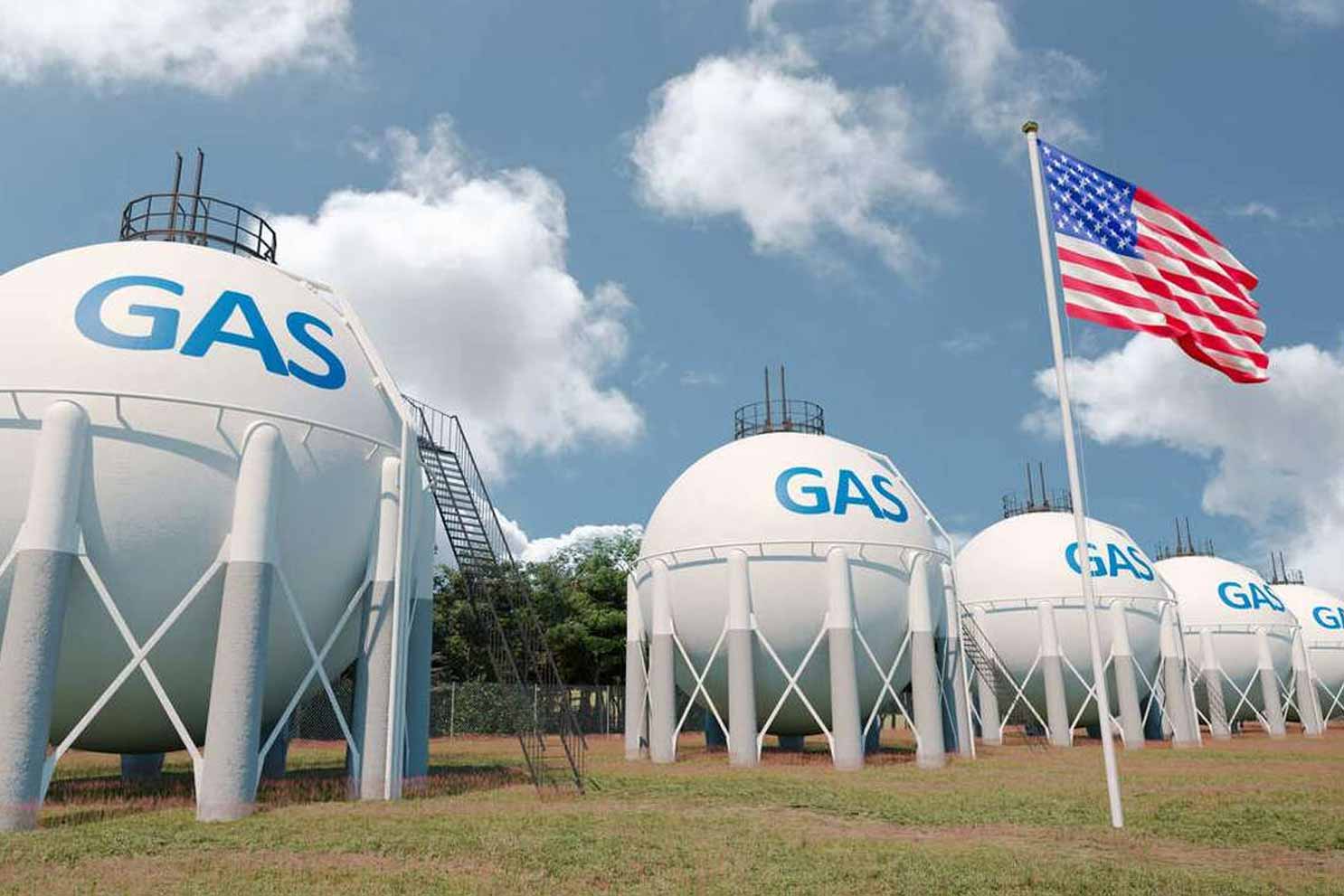
“The US currently supplies about 20% of the EU’s total natural gas imports and half of its LNG imports.”
Petroturk | Enerji Haberleri
- 18 Eylül 2025 15:51
US President Donald Trump announced the signing of a large-scale trade agreement with the European Union (EU), covering energy exports and investments. The deal includes commitments for $750 billion in energy product purchases and $600 billion in investments in the US. While the EU continues its policy of moving away from Russian energy, it is shifting its axis toward the US.
The EU currently imports around $90-100 billion worth of US energy products annually, but over the next three years it is expected to spend an average of $250 billion per year on energy imports. This would increase the EU’s annual energy imports from the US by roughly 2.5 times.
These figures include projected increases in imports of oil, liquefied natural gas (LNG), and nuclear fuel, as part of the EU’s efforts to reduce dependence on Russia.
Under the “REPowerEU” plan announced in May 2022, the EU aimed to cut Russian natural gas imports by two-thirds by the end of the year and achieve full energy independence well before 2030. In this context, LNG imports from the US have been increasing, while investments in renewable energy and energy efficiency have gained momentum. By 2023, Russian pipeline gas exports to the EU had fallen by more than 80%.
“EUROPE HAS LARGELY MOVED AWAY FROM RUSSIAN ENERGY”
Mark Zandi, Chief Economist at Moody’s Analytics, told AA that the Russia-Ukraine war pushed the EU toward greater diversity in energy supply: “Europe has largely moved away from Russian energy. Before the invasion of Ukraine, Russia accounted for more than 40% of the EU’s gas imports; today that share has dropped below 20%. Imports from the US have been decisive in this transition. The US currently supplies about 20% of the EU’s total gas imports and half of its LNG imports.”
Zandi expressed doubts about the realism of the EU’s $750 billion energy import target: “In 2024, the EU imported only $75 billion worth of energy products from the US, of which just $15 billion was LNG. A significant increase is needed to reach the targets.”
He also argued that purchases and investments of this scale cannot be directed by the EU itself: “Ultimately, the authority to direct such spending lies not with the EU but with national governments and even private companies. I believe the claims that the EU will make an additional $600 billion in investments in the US are largely an empty promise.”
US LNG TO DOMINATE EU IMPORTS
John Roberts, an energy security expert at Methinks, emphasized that the agreement marks an important step in US-EU energy cooperation.
Roberts said: “If we define Europe solely as the EU and exclude Norway from these calculations, US LNG will become dominant in the EU’s LNG imports in the coming period.”
While the US’s role in LNG will increase, Roberts noted that Europe would continue to source most of its oil needs from the Middle East and North Africa: “In 2024, Norway exported twice as much gas to the EU as the US — 124.7 billion cubic meters compared to 60.7 billion. Algeria supplied 44.9 billion cubic meters.”
Roberts added that Trump administration regulations supporting fossil fuels would influence the wave of European investments in the US: “At the same time, US technology companies will also seek to position themselves within renewable energy projects in the EU.”
Highlighting the limited role of governments in realizing the EU’s $750 billion investment commitment in the US, Roberts said: “Neither the European Commission nor member states can compel private companies to invest abroad. This investment flow will depend largely on the incentives the US provides to companies. I am skeptical that such a large commitment will translate into actual investment before it is detailed and approved.”
Roberts concluded that the long-term impact of transatlantic energy relations will depend not only on political will, but also on economic realities and regulatory frameworks.


SON HABERLER
Pakistan, TPAO’nun sismik gemilerini sonbaharda karşılmaya hazırlanıyor5 Temmuz 202608:55 Rusya’nın Novorossiysk şehrinde benzinin bittiği bildirildi4 Temmuz 202615:00 Ulusal Yeşil Finans Stratejisi ve Eylem Planı’na ilişkin Cumhurbaşkanlığı Genelgesi Resmi Gazete’de4 Temmuz 202614:28 Sunar Yatırım’dan “Plastiksiz Temmuz” gündeminde geleceğe çağrı4 Temmuz 202611:30 Rosatom, Vietnam’da Katmanlı Üretim Teknolojileri Merkezi’nin kurulmasına destek verecek4 Temmuz 202610:00
Diğer Haberler