







Minister Bayraktar: “Significant Agreements for Natural Gas Supply Security Made at Gastech 2025”
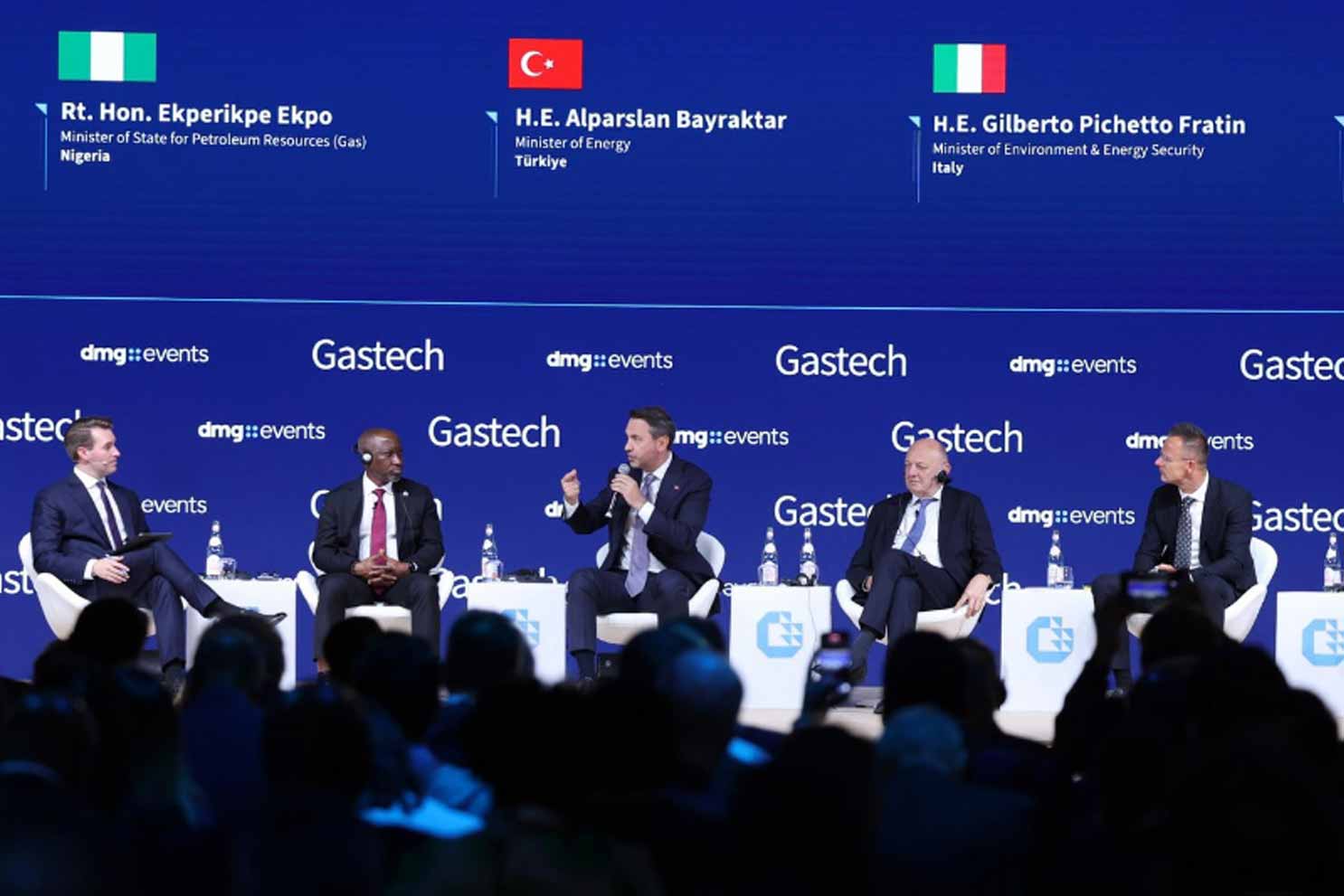
Energy and Natural Resources Minister Alparslan Bayraktar stated that Turkey has signed exceptionally important agreements regarding natural gas supply security during the Gastech 2025 Forum, noting that liquefied natural gas (LNG) will begin arriving in the country starting from November-December.
Petroturk | Enerji Haberleri
- 15 Eylül 2025 12:21
Energy and Natural Resources Minister Alparslan Bayraktar stated that Turkey has signed exceptionally important agreements regarding natural gas supply security during the Gastech 2025 Forum, noting that liquefied natural gas (LNG) will begin arriving in the country starting from November-December.
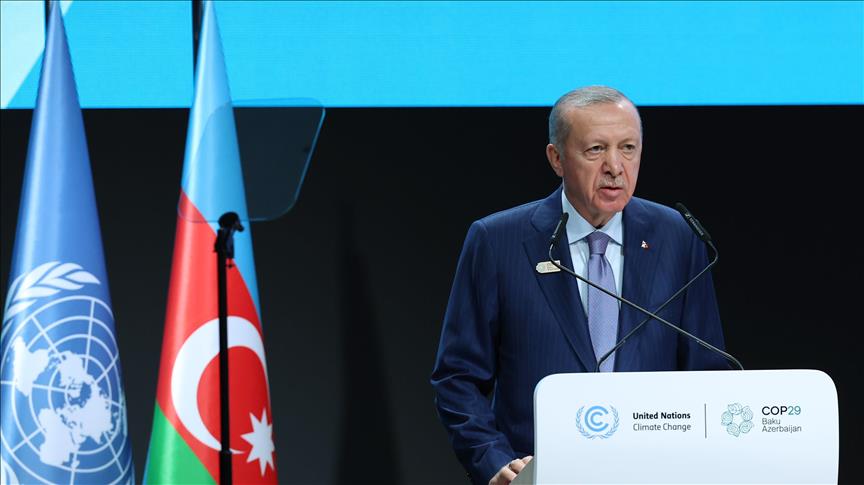
Speaking to Anadolu Agency (AA) in Milan, Italy, where he attended the Gastech 2025 Forum, Bayraktar provided an update on Turkey’s energy initiatives and international engagements.
He noted that numerous bilateral meetings were held on the sidelines of the conference, resulting in signed agreements, and said:
“We place great importance on diversity of natural gas sources in Turkey. In addition to our domestic investments, especially production from the Sakarya Gas Field, the investments we make abroad and diversification within our supply portfolio will allow BOTAŞ to bring more competitive gas to Turkey and reduce gas prices for our citizens.”
Bayraktar added that BOTAŞ has signed agreements with various companies this year as well, similar to longer-term contracts established last year at the Gastech conference in Houston, USA.
He said BOTAŞ signed agreements for the purchase of approximately 15 billion cubic meters of natural gas over up to three years, primarily U.S. LNG, starting this winter.
“This will significantly contribute to diversity in BOTAŞ’ supply portfolio. We have made exceptionally important agreements for the country’s supply security and natural gas security. Starting from this coming November-December, LNG will begin arriving in Turkey under these agreements,” Bayraktar stated.
He highlighted that over the past eight years, Turkey has made major infrastructure investments, including domestic and international pipelines and storage, following the announcement of the strategic document called the National Energy and Mining Policy.
“The most important factor is the increase in regasification capacity, which is significant on a global scale. Compared to 2016, Turkey’s ability to receive LNG by ship and thus access LNG and natural gas from different sources has increased fivefold,” he added.
Bayraktar emphasized that these infrastructure investments have also positioned Turkey as an important supplier. “Now, we are able to export the gas we produce and any surplus to other countries. For instance, we have connected Turkey’s gas system with Syria and started exporting Azerbaijani gas to Syria. Similarly, there is a pipeline near the Iraqi border, and with developments there, we may begin exporting gas to Iraq as well.”
He noted that with existing pipeline projects, including the Turkey-Bulgaria interconnection, Turkey has started exporting gas to European countries. “By increasing gas supply in Turkey, gas prices in the domestic market will decrease, and Turkey will gain from exporting surplus gas, especially to Europe,” Bayraktar said.
Bayraktar underlined Turkey’s goal of reducing foreign energy dependency and achieving energy independence, noting work within Turkey and in its “Blue Homeland” maritime zones. “Without excluding any energy source, Turkey will utilize domestic coal, find and use its natural gas and oil, and maximize wind and solar power in the economy,” he said.
Rising Energy Demand
Bayraktar highlighted that one of the most critical topics at Gastech 2025 was that global energy demand is growing faster than expected, a trend relevant for Turkey as well.
“Our 2050 projections indicate that Turkey’s electricity needs will be three times higher than today. Emerging technologies, artificial intelligence, data centers, electric vehicles, and electrification in buildings and across the economy will increase electricity demand beyond expectations. Meeting this rising energy demand is essential,” he said.
He also mentioned climate change, global warming, and extreme weather events, citing unusually high electricity consumption due to heavy air conditioner use during a very hot summer.
“Therefore, we see diversification in sources, routes, and supplier countries as critically important,” Bayraktar added.
Key Projects and International Cooperation
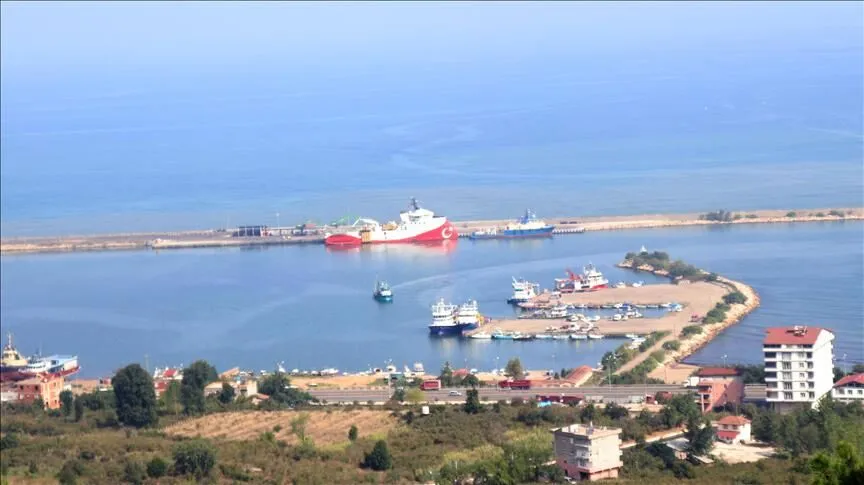
During the forum, Bayraktar noted significant agreements on Turkey’s natural gas production, including the completion of Phase-1 at the Sakarya Gas Field, ongoing Phase-2, and important contracts for Phase-3 with the Turkey Petroleums Offshore Technology Center (TP-OTC).
“In Phase-3, we have signed agreements to quadruple Turkey’s current production by 2028. Underwater operations and pipeline-related agreements have been finalized. We aim to implement this project promptly and proceed to planning Phase-4 for 2030,” he said.
Bayraktar added that ministers from nearly 25 countries attended the forum and that he held meetings with U.S. officials, including Secretary of the Interior Doug Burgum and Secretary of Energy Chris Wright.
Regarding U.S.-Turkey energy cooperation, Bayraktar said: “This is progressing concretely with LNG supply from the U.S. We also discussed potential collaborations in conventional and small modular nuclear reactors, as well as petroleum and natural gas projects. U.S. companies are partnering with TP-OTC on unconventional production in Diyarbakır, and we are exploring third-country collaborations in Libya, the Middle East, and other regions.”
He also mentioned opportunities for cooperation in critical minerals and potential agreements during the upcoming UN General Assembly in New York.
Bayraktar emphasized that Turkey’s renewable energy target to quadruple capacity by 2035 can be achieved through infrastructure investments, potentially in collaboration with U.S. companies and financial institutions. He also referenced joint projects to meet Syria’s electricity and energy needs.


SON HABERLER
Pakistan, TPAO’nun sismik gemilerini sonbaharda karşılmaya hazırlanıyor5 Temmuz 202608:55 Rusya’nın Novorossiysk şehrinde benzinin bittiği bildirildi4 Temmuz 202615:00 Ulusal Yeşil Finans Stratejisi ve Eylem Planı’na ilişkin Cumhurbaşkanlığı Genelgesi Resmi Gazete’de4 Temmuz 202614:28 Sunar Yatırım’dan “Plastiksiz Temmuz” gündeminde geleceğe çağrı4 Temmuz 202611:30 Rosatom, Vietnam’da Katmanlı Üretim Teknolojileri Merkezi’nin kurulmasına destek verecek4 Temmuz 202610:00
Diğer Haberler